Showing posts with label legends. Show all posts

Wednesday, June 5, 2013

Legends of Partholon: the Bloodreaper, Ariokk

Art by Steve Argyle
Names & Titles: Ariokk, the Bloodreaper, the Duke of Blades, Prince of the Seven Darks

Symbols & Depiction:  In Tyrhennea, he is depicted with the arms and armor typical of the Delian bronze-age - what the Imperial imagination considers primitive and semi-barbaric. His face is always kept hidden. Vagyars depict him as a savage cloaked in the skins and bones of his kills - beast and man alike.

Prestige: One of the few Chaotic gods in the imperial pantheon, Ariokk revels in bloodshed and brutality. He serves Valkas as a frenzied warrior who balks at nothing, and is regarded as a patron of warfare. Tyrhenneans prefer to keep his worship at something of a distance, but many Vagyars embrace his patronage - especially berserkers.

Veneration: Ariokk's windowless temples bear mosaics depicting the most horrifying scenes of slaughter, murder, and appalling violence of every stripe. Most soldiers disdain this mad god's patronage - at least while they remain at home or in a quiet garrison. In the fog of war, it is common to hear the battlefield prayer, "Blood and souls for Ariokk!" as kill after kill is dedicated in his name.

Any place or object associated with him is held as savage and dangerous. There are rumors that his cult includes certain priests or zealots who sacrifice to him through random murders and worse.

Legends: The poet Grucca frequently depicts Ariokk as a villain, occasionally as a treacherous and untrustworthy ally to the gods and heroes of his tales. Ariokk lends his blessings to anyone who shows strength, courage, or savagery, without regard to his supposed loyalty to Valkas. Grucca even claims that Ariokk is the god most hateful to the Lawgiver.

It is also said that Ariokk was the chief patron of lost Agha-yin. Some variations of the legend tell that he was once a wise sorcerer-god, but that he gradually devolved into madness, perhaps as a result of the growing depravities among his worshippers. In these tales, it was Ariokk who destroyed Agha-yin, smiting its towers and driving its armies to slaughter the populace before sending the entire island-continent to drown beneath the Sedrian Sea.

Monday, March 19, 2012

Legends of Partholon: Thunderlord Tanaris

Found on the wall of many a forge.
Names & Titles: Tanaris, the Thunderlord, the Hammer-god, Lord of the Forge, the Wrath of Valkas.

Prestige: He is counted among the sons of Valkas, and is the smith and weaponsmaster of the heavenly court. In Tyrhennea, Tanaris is mainly the patron of smiths, but his patronage is seen as the foundation for the empire's rise to power. He is also recognized as a warrior who carries out the will of Valkas.

Among the Vagyar, Tanaris is a warrior first and a smith second. He champions mankind in the battle against chaos, and demands none of the weird devotions and sacrifices required by rival war-gods like Ariokh.

Symbols & Depiction: The hammer is his primary symbol, while lightning (poetically called "sky-fire") may represent either the fires of his forge or the flames of his fury. He is depicted as a robust man, with his hammer never far from hand, and is normally quite jovial. Only when he is called to battle does his fury erupt to shake the earth and burn the heavens.

Veneration: It was the secret crafts of forging steel and working mail that propelled Tyrhennea to dominance and founded the empire. His image adorns most forges, and most citizens see him as a god of crafts only. However, the military embraces him and supports his priesthood in order to celebrate his holy days and to praise him on return from successful campaigns. Veterans give him due credit for the quality of arms and armor that have kept them alive. Furthermore, Tanaris' willingness to set aside the tools of his craft to fight for the Lawgiver's cause is an example for all soldiers.

Legends: In the age when gods walked the earth, Tanaris and Alia came to the folk of Valinar in the north and taught them the Great Crafts. He taught them to work metal, wood and stone, while she taught them the crafts of textiles, leather, and pottery. Together they raised men from savagery to civilization, and the reign of Valinar is still remembered as a golden age for humanity. When the monsters of the elder world threatened to overwhelm mankind, Tanaris and Alia took to battle, and inspired heroes to follow their example, to battle the chaotic hordes. Many a book of tales has been filled with the exploits of gods and men hunting these spawn of the black eons.

When the vilest monsters of the northlands were slain or driven into the nightlands beneath the earth, the gods returned to their heavenly abode, and envoys of Valinar brought their crafts to distant corners of the world. For a time, it seemed that their greatest threat would be the ancient empire of Agha-yin, or the sorcerers of Arkhemea, but in the end it was the Kruthar savages that overwhelmed Valinar and smote its grandeur into ruin.

It is common these days for the elders of any tribe or the priests of any city to claim their folk as the true descendants of Valinar. Perhaps it is so, that the envoys of that great civilization seeded their blood as well as their crafts among the many tribes of the earth. Perhaps it is naught but hubris and superstition. 

Artifacts: Legend tells that when Tanaris was teaching his mortal students the craft of smithing, a Favaragh giant came upon them and thought to feast upon the hapless mortals. Tanaris hurled his hammer at the giant, slaying it, and continued his lesson. This hammer, the ur-hammer of Valinar, was left in the care of his students to be the prototype from which they would devise their own tools.

Thursday, February 23, 2012

Legends of Partholon: Death's Jester, Rakhir

If you see him in a dungeon, go the other way.
Names & Titles: Rakhir, the Red God, Death's Jester, the Devil Clown, Rictus Mortis, the Clown Prince of Chaos


Symbols & Depiction: Rakhir is imagined as a skull-faced jester in red and black. A skull with a jester's cap or even a harlequin pattern of red & black can be used to signify him.


Prestige: One of the few chaotic gods recognized in the Tyrhennean pantheon, he is regarded as the jester in Valkas' court. He is associated with death and the underworld, and the most absurd and tragic deaths are considered evidence of his uniquely sick sense of humor.


Veneration: There are special coins minted in Tyrhennea, stamped with Rakhir's likeness, that are reserved for offerings at graveyard shrines. As a patron of the dead, he is privy to their lost knowledge, and may be petitioned to reveal what he knows. Such revelations inevitably come in the form of riddles and puzzles, or more subtly as absurd (and even horrible) accidents that inspire insight.

Ancient Delian pottery has been discovered which depicts a skull-faced archer dressed in ragged red and black, shooting down warriors and kings. Gravesites in the distant north sometimes feature a human skull affixed with ram's horns, or statues depicting such a form, often with onyx and ruby gems in the eyes.

They're usually underground,and less cheerful.
Ancient ruins from the height of Agha-yin's dominion occasionally feature a "bone chapel," a temple or shrine dedicated to Rakhir, whose architecture incorporate real skulls and bones. The tradition was continued in ancient Arkhemea, and bone chapels have been commissioned by a handful of Tyrhennean emperors and aristocrats over the last two centuries.  

Legends: Rakhir is said to be charged by Valkas with enforcing the Law of Death, that the dead remain dead, and remain confined to their tombs and the netherworld. Unfortunately, it amuses Rakhir to see this law broken, and so long ago he gave mankind the forbidden knowledge to raise the dead. He is also said to interpret his duties rather loosely, so that the dead are permitted to haunt graveyards and tombs, and wherever their bodies lay unburied.

He appears in the tales of other gods and mortal heroes as a foil, where he may taunt them with valuable knowledge concealed by riddles. He is also depicted playing pranks with dire consequences, which may be as simple as slaying a hero's friend or loved one in a tragic accident, or something that appears quite harmless but leads to great and terrible things. The devastating war that destroyed the ancient kingdom of Ilion began with a prank Rakhir played on the goddess Yuna.

Rakhir has fathered three sons, all considered demigods: the Red Death, the Black Jester, and the Fire Clown. Each has been prophecied at least once either to conquer or destroy the world.

Artifacts: Rakhir is sometimes depicted carrying a kind of scepter bearing the likeness of his head. Many sorcerers believe it is his symbol of authority over the dead, or of his license to jest, jape, and defy the gods. Of course, any mortal who discovered such an object must question whether the Devil Clown has carelessly misplaced his scepter, or has merely set in motion one of his grisly pranks.

Tuesday, January 31, 2012

Legends of Partholon: The Lawgiver, Valkas

A bronze statue of Valkas
Names & Titles: Valkas, the Lawgiver, the Skyfather


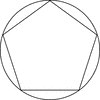
Symbols & Depiction: Symbols include the eagle Kuros, often seen clutching bolts of lightning in its talons; the Solkar, a pentagon in a circle; and the Trishulion, Valkas' trident-like staff of power. He is depicted as an aged warrior, stern and unyielding, but subject to occasional whims.

Prestige: The Empire of Tyrhennea holds Valkas to be chief of the among the gods. It was he who subdued the titans, the dragons, and the abominations of the Elder World, and he who decreed or divined the natural laws of the cosmos. His bride, Yuna embodies the harmony of family, society, and the World. Alcidine is either his earthly son or his very avater. Taranis and Valkarrea, primarily patrons of craft and wisdom, also go forth in warrior aspects to enforce the Lawgiver's will. Even his brother Grivenar serves as adviser and seer to the Skyfather's court.

Among the Vagyar, his prestige is much diminished. Although recognized as the Skyfather and conqueror of monsters, his veneration is eclipsed by that of his children and his brother.

The Solkar
Veneration: Valkas is often invoked to witness binding oaths, and swearing such an oath before witnesses while sketching a solkar or trishulion is by Tyrhennean law the equal of a signature or seal. Even the Vagyar recognize that Valkas will hold a man to his word, and that ill-fortune will follow those who defy him. The typical Vagyar's pragmatic solution is to avoid making promises, or else to break them with such regularity that Valkas can't possibly take such oaths seriously.

In Tyrhennea, the Law for which Valkas stands is built upon a foundation of loyalty to one's society, community, and family. Personal integrity and self-sacrifice and seen as great virtues, and misfortune is frequently attributed to transgressions of cosmic law. Sacrifices and penance may placate the Lawgiver, but Yuna is often beseeched to intercede for mercy. In the Delian cities, it is widely recognized that Valkas has a soft spot for those who can impress him with their daring and panache. "If you cannot be meek, be astonishing," as one Delian proverb puts it, "and the gods may smile on you yet."

Legends: There are two main cycles of legends about Valkas. The first is focused on his exploits at the dawn of time, slaying or subduing the monsters of the Elder World and ordering the cosmos according to Law. The second normally centers around a mortal who transgresses against the cosmic Law, and either suffers some terrible fate or serves as the god's champion on one or another epic quest. Valkas acts as little more than a judge or patron in these latter tales.

Artifact - Thunderheads: Valkas is occasionally depicted shooting thunderbolts from his bow, either to warn or to slay those who have offended his judgement. It is said that the arrows that channel this sky-fire are burnt to cinders, but that the arrowheads may sometimes survive. Treasure-hunters have been known to scour the sites of lightning strikes in hopes of finding such relics.

Wednesday, January 25, 2012

Legends of Partholon: the Rune-lord, Grivenar

Grivenar encountered on a foggy night
Names & Titles: Grivenar, the Grey God, the Twilight Eye, the Rune-lord, the Father of Magic

Prestige: A major god, but one whose attention is best avoided.

Veneration: The Vagyar deem him the most powerful of all the gods, and therefor their leader. In Tyrhennea, he is depicted as brother to Valkas, and his adviser on eldritch matters. His ravens bring news and omens that even Valkas' sharp-eyed eagle might overlook.

The Vagyar generally deem all magic-users his priests, and fear to cross his will. Nonetheless, Vagyar warriors distrust magicians, for Grivenar acts on his own purpose and not for the good of mankind. Even a hero who wins the Grey God's favor is still a pawn that may be sacrificed.

In the Empire he is little-worshipped and rarely beseeched, save by those who seek protection from or mastery over magical forces. He is associated with guardianship of dead souls, and ravens and crows are said to be his spies and servants, as well as carrying newly-dead spirits to the underworld.

Overall, he serves only his own schemes, and it is deemed wisest to avoid his attention.

Legends: It was Grivenar who gave to mankind the secret of the Cantrik glyphs, the runes and hierograms that codify magic into spells. It is said that he journeyed through the Nine Beyonds and suffered great agonies to discover the secrets of spellcraft. Some legends say that even the fundamental concept of the written word was taught to humanity by Grivenar.

Many Vagyar legends tell of heroes who were given magical trinkets or enchanted blades by Grivenar, or by a nameless traveler as he is often depicted, or even by a great, one-eyed raven. In virtually all of these tales, the hero met his doom when his artifact was inevitably lost to folly, or fate, or to the god's whimsy. One legend tells that Grivenar collects the souls of great heroes to form an army somewhere in the realms of the dead, and that he will guide aspiring heroes along the path to greatness, only to lead them to their dooms when they have proved themselves worthy of his collection.

Artifact: The Runestaff. This gnarled, wooden staff is inscribed with runes in winding patterns along its length. Some legends claim it is the heart of the world-tree, and is therefore the very incarnation of the axis mundi, the center of the world. Its runes are said to encode many spells, and it is also called "the Key to the Outer Gate," referring apparently to the ability to travel beyond the world's edge. The Runestaff has come into mortal possession several times over the ages, sometimes for years, sometimes for scant days. In every case, the staff eventually disappeared.

Legends of Partholon: Rune-swords

There is a legend that tells of a time long ago, when humanity was still young. The elder race of Agha-yin had long fallen to decadence, worshiping obscenities and things from Outside. The sorcerer-kings of Arkhemea embraced wilder and darker magicks in their endless struggle for primacy. These litanies and incantations echoed across the chasms beyond space and time, and terrible things turned their attention to this small realm of light and life. 

Out of the north came a sage cloaked in grey, and with him he brought three great secrets. The first was the secret lore of wizardry, a more constructive magic that attuned its user to the harmonies of the cosmos. The second was the secret artifice of the rune-swords, that would give any stalwart soul the means to battle the spawn of chaos. The third secret has been lost to time. 

There are other legends, of course. There are texts that were written in scripts more ancient than any human tongue, and fragments still survive, copied and annotated in tomes of forbidden lore. Among those scholars and sorcerers who have read these passages, there are those who have claimed that rune-swords were known to these pre-humans, and that even the princes of Agha-yin had rune-swords of their own.  

Legends of Partholon: The Grey Sage, Zagyg

A statue of the Grey Sage
Names & titles: Zagyg, the Grey Sage, the Mad Mage, the Labyrinth Lord, the Catacomb Keeper

Prestige: Demigod or legendary hero

Veneration: He is a patron of magic, moreso of temperance in spellcraft, and wizards claim him as the founder of their tradition. He is commonly invoked for protection from malign spells, and sorcerers call upon him to keep their incantations from drawing otherworldly attention.

He is widely regarded as a champion of the gods of Law, and credited with sealing of the Underworld's many entrances with sprawling labyrinths, filled with tricks and traps to keep the spawn of Chaos locked in their dark world, and to deter those who might be tempted to ally with them.

Perhaps as an extension of this aspect, Zagyg is also deemed a protector of tombs and crypts. Paradoxically, treasure-hunters and tomb-robbers often sacrifice in his name, in hopes of currying guidance and luck, or at least mercy.

However, Zagyg is also called by some "the Mad Mage," and credited with 

Legend: Perhaps because he is such a minor figure, no single, unified version of his legend has yet risen to prominence. The accounts that do exist are so varied as to be contradictory. Some tell that he is the son of, or even the earthly incarnation of, the grey god Grivenar. Others claim that he was an Arkhemean sorcerer-king who repented and abandoned the perpetual struggle for power to pursue a higher calling: crusading against the creatures of Chaos and the Underworld. One version says simply that he came out of the north bearing spells and artifacts to raise a crusade against the vile decadence of Agha-yin and the sorcery of Arkhemea.

Artifacts:  Any rune-sword might be considered an artifact of Zagyg, but he, like any magic-user, was unable to wield them himself. When confronted with physical force, Zagyg often relied on his Serpent Staff.  He would hurl the staff at his foes, or simply throw it down at his own feet, and it would become a great serpent, crushing his enemies in its coils or even devouring them whole. When none still dared oppose him, the serpent would return to his hand and resume its former shape.