Showing posts with label fluff. Show all posts

Wednesday, June 5, 2013

Legends of Partholon: the Bloodreaper, Ariokk

Art by Steve Argyle
Names & Titles: Ariokk, the Bloodreaper, the Duke of Blades, Prince of the Seven Darks

Symbols & Depiction:  In Tyrhennea, he is depicted with the arms and armor typical of the Delian bronze-age - what the Imperial imagination considers primitive and semi-barbaric. His face is always kept hidden. Vagyars depict him as a savage cloaked in the skins and bones of his kills - beast and man alike.

Prestige: One of the few Chaotic gods in the imperial pantheon, Ariokk revels in bloodshed and brutality. He serves Valkas as a frenzied warrior who balks at nothing, and is regarded as a patron of warfare. Tyrhenneans prefer to keep his worship at something of a distance, but many Vagyars embrace his patronage - especially berserkers.

Veneration: Ariokk's windowless temples bear mosaics depicting the most horrifying scenes of slaughter, murder, and appalling violence of every stripe. Most soldiers disdain this mad god's patronage - at least while they remain at home or in a quiet garrison. In the fog of war, it is common to hear the battlefield prayer, "Blood and souls for Ariokk!" as kill after kill is dedicated in his name.

Any place or object associated with him is held as savage and dangerous. There are rumors that his cult includes certain priests or zealots who sacrifice to him through random murders and worse.

Legends: The poet Grucca frequently depicts Ariokk as a villain, occasionally as a treacherous and untrustworthy ally to the gods and heroes of his tales. Ariokk lends his blessings to anyone who shows strength, courage, or savagery, without regard to his supposed loyalty to Valkas. Grucca even claims that Ariokk is the god most hateful to the Lawgiver.

It is also said that Ariokk was the chief patron of lost Agha-yin. Some variations of the legend tell that he was once a wise sorcerer-god, but that he gradually devolved into madness, perhaps as a result of the growing depravities among his worshippers. In these tales, it was Ariokk who destroyed Agha-yin, smiting its towers and driving its armies to slaughter the populace before sending the entire island-continent to drown beneath the Sedrian Sea.

Saturday, May 18, 2013

Lore of the Kruthar

Updated - the party has fought a skrag now.
 
Art by Talon Dunning
Partholon is famed throughout the empire for its haunted forests, mysterious faeries, and the murderous Druid cult, but the greatest peril throughout the frontier baronies would have to be the Kruthar barbarians. These savages dwell in the Bleak Hills to the north, where they worship and breed with the foul spawn of uncounted hells. They strike suddenly and mercilessly, stealing livestock and equipment and abducting villagers, the fates of whom may never be known for sure, but are the subject of grim speculation. Common theories range from slave labor to sacrifice to cannibalism and worse.

Most Partholonians will tell you that Kruthar aren't actually men, but merely man-like animals. And it is true that when barbarian corpses are cleared from a battlefield, many seem to bear but a brutish approximation of human features, and others appear more animal than human, but for many the tattoos and war-paint and ritualized scars seem to disguise the face of mere humans.

Recently, Morgana of the Iron Wolf clan became attached to the treasure-hunters operating out of Sham. She has learned a little of the common tongue, and has taught her lover Brianne a little of her own. Though communication remains difficult, the party is at last learning a little about the Kruthar. Some of this new lore is summarized here. 
The Kruthar refer to themselves as the Free People. The ancient Firians, ancestors of modern Partholonians, referred to themselves the same way. They believe they once ruled over the whole of Partholon, but that they were driven into the bleak northern hills and mountains by the Firian tribes. To survive in the rugged highlands, they made pacts with the creatures of Chaos they found lurking there, and bound these pacts with their bloodlines. To this day, status is closely linked with the purity of this eldritch blood, as seen manifest in mutations and deformities.

Kruthar society is divided into clans, castes, warbands, tribes, and hordes. The interaction and overlap of these groups is more complicated than Morgana can fully explain, but their practical function seems to be to give warriors an excuse to fight for status and power while simultaneously giving them a way to join their strength against outsiders.

Kruthar religion venerates the spirits of the wild and demons of the underworld. They hold destruction, killing, and cruelty as sacred. Many believe their role in the world is to purify it of weakness. Some believe their role is to burn the world down, and that the only purity to be had is the silent eternity of oblivion. Kruthar ethics are mostly variations on "Might makes right." What you are strong enough to take is yours for the taking. What you are strong enough to keep is yours to keep.

Gender roles are assumed but not rigid. Men normally become hunters and warriors while women typically see to the clan's home and rear the children, but there is no social stigma for those who deviate from the norm. Breeding is a sacred responsibility, as the harsh lifestyle and unreliable fertility of the Kruthar means extermination is a perpetual threat. Contributing many children to the clan is a good way to gain status, and many Kruthar of both genders take on multiple partners. It is uncommon, but not rare, for Kruthar to take lovers of their own sex. As long as such affairs don't distract from the clan's need for new blood, there is no stigma involved.  
They respect strength as the primary virtue, but their definition of strength is quite broad. Charisma, cunning, and supernatural powers are included alongside battle-prowess and mere brawn. In essence, whatever lets you get your way is considered a virtue.
The caste of a Kruthar is determined not by his parentage, but by the mark of Chaos - the degree of visible mutation and deformity. Greater mutation corresponds to greater status. The castes usually segregate their warbands, but intermingle freely within their clans.A warrior of any caste may be gifted with the sacred madness of the berserker rage. Any Kruthar can advance beyond the status accorded by his caste by proving his strength. Tattoos, piercings, and ritual scars serve to mark improved status.
  • The majority of Kruthar are born to the caste known as donadar, bearing little or no sign of Chaotic deformity. Although they have the lowest status, they are the most fertile, making donadars prized as mates by all castes.
  • About one in four Kruthar will be a shalgar. Shalgars are bigger, stronger, and tougher than donadars, and are visibly marked by Chaos.
  • Less than one in twenty Kruthar will be a morlak. Morlaks are huge, hulking brutes, sometimes twice the size of a man, but frequently stooped or hunchbacked. They are heavily mutated, barely human at all, and some even grow one or two extra arms. Morlaks frequently have little more than animal wit, but the few who are gifted with both strength and cunning become great warlords.
  • The very rare skrag is among the most powerful of Kruthar. Skrags are even larger and more powerful than morlaks, more heavily mutated and frequently gifted with a burning madness. They are almost entirely inhuman, often growing scales, fur, and thorn-like spurs in patches. Extra arms are common, and some even grow an extra head. 
  • Clans are frequently led by a grugak, a magician with the power to bestow curses and change shapes. A strong clan will have a chief grugak and his lesser apprentices. 
With Morgana's information and the party's experience fighting Kruthars, some game data can be made available.

Kruthar Warrior
AC 14
HD 1
AP 1
Morale 8
Alignment: Chaotic
Sacred Madness: When Kruthar fail a morale check or are subject to any fear effect, there is a 1 in 10 chance that they will be overcome by a berserker rage. A berserk warrior of the common caste will have the following statistics:

Kruthar Berserker
AC 11
HD 1
AP 4
Morale 12
Alignment: Chaotic
Hard to Kill: A berserker with 0 hp can continue to fight until wounded again.

1 in 4 warbands encountered will be of the elite shalgar caste.

Kruthar Elite
AC 14
HD 2
AP 2
Morale 9
Demon Eyes: These Kruthar can see in total darkness, but reduce AP by 1 in sunlight.
Savagery: These Kruthar can fight with tooth and nail even if they are disarmed.
Sacred Madness: as above.

Skrag
AC ??
HD 6+3
AP 7
Morale <11

The party has not encountered morlaks, so no reliable data can be extrapolated from Morgana's lore. They have battled a grugak in Stonehell, and are aware that changing form seemed to heal his wounds, but have no more concrete data beyond that.

Sunday, May 12, 2013

Return to Partholon: Prologue to Season 3


In the last weeks of autumn, our party returns to Sham from their foray to distant Stonehell, with new guests: Brianne and Morgana. Morgana's tattoos, characteristic of the Kruthar savages, spark some concern among the villagers, but Nylian is quick to assure everyone that the girl is a captive rescued from Kruthar captivity, and that the winter will be spent teaching her how to live among civilized folks. Nylian has a reputation for honesty - brutal honesty, in fact - so no one seems to realize that she is lying through her teeth.

Thus, the young women are able to settle into their winter routine as guests at Ash's townhouse without any hassle. Gradually each learns a bit of the other's language and culture, and lay the foundations of a strong bond between them. Morgana is pleased to have been claimed by a strong warrior, and the party is obviously a powerful war-band, so she hopes to assist Brianne in building strength, status, and renown. Although love between two women is as uncommon among the Kruthar as it is in Partholon, neither culture attaches any serious stigma to it, and they are free to discover whether theirs will be a brief affair or a lasting romance.

Clementine and Bill the Green spend most of the winter in seclusion, working on the means to interweave their magicks and awaken the potential in the alicorn they had recovered from the goblins' lair. Their approachs are very different - Bill spends hours and days pouring through his collection of obscure and arcane tomes, while Clementine spends equal time in meditation seeking inspiration - there is enough common ground between their crafts that they are able to produce results. The spirit of the unicorn has been invited to rest, to lend a measure of its grace into a sacred spear which will be an instrument of healing as well as a weapon against the hordes of Chaos.

Vennet is similarly hard at work through the winter, calling on her spirit guides and giving them generous sacrifices in order to expand her spell-trove. She spends a great deal of money through the winter buying the finest animals and butchering them - and while the spirits feast on the steam of  spilled blood and the smoke of burnt fat, the villagers share in a feast of hot roast meat, and Vennet builds strange totems from the bones. These feasts help to assuage the effect of the famine, and serve as an occasion to retell the old stories and sing the old songs handed down from their Firian ancestors, from before the coming of the Empire. Though the cult of the druids is banned by Imperial law, here in Sham it has taken root once more.

Nylian's father is recovering from his illness, and she devotes herself to helping him regain his former strength. He is pleased with how well she has managed the forge in his absence, and she is freed from the responsibility of overseeing the various specialist smiths who work under her father. Though the Kruthar savages continue to raid through the winter, she is now free to face them toe-to-toe and make them remember why they fear "the hammer girl." She and the Freestone brothers come to be seen by the militia as an elite squad that dives into the thickest fighting and leaps into berserker mobs and always returns with a trio of savage grins.

Ash and his men are likewise a welcome aid to the militia. Long experience has made them a solid fighting unit, but their greater contribution is the ability to inspire and organize the village warriors. With Ash, Spurlock, and Molin each taking charge of a squad of fighters, the barbarian raiders frequently find themselves outflanked, outfoxed, and out of luck. The Kruthar have always preferred to hit hard and carry off supplies, beasts, and victims as quickly as possible, before defenders can organize enough to return substantial losses. More and more, the savages are forced to strike quickly and withdraw immediately to avoid getting mired in a grueling battle. Before the Storm Moon is through, the raids grow less and less frequent, less and less determined, and the villagers of Sham can enjoy a measure of peace at last. 

Monday, March 19, 2012

Legends of Partholon: Thunderlord Tanaris

Found on the wall of many a forge.
Names & Titles: Tanaris, the Thunderlord, the Hammer-god, Lord of the Forge, the Wrath of Valkas.

Prestige: He is counted among the sons of Valkas, and is the smith and weaponsmaster of the heavenly court. In Tyrhennea, Tanaris is mainly the patron of smiths, but his patronage is seen as the foundation for the empire's rise to power. He is also recognized as a warrior who carries out the will of Valkas.

Among the Vagyar, Tanaris is a warrior first and a smith second. He champions mankind in the battle against chaos, and demands none of the weird devotions and sacrifices required by rival war-gods like Ariokh.

Symbols & Depiction: The hammer is his primary symbol, while lightning (poetically called "sky-fire") may represent either the fires of his forge or the flames of his fury. He is depicted as a robust man, with his hammer never far from hand, and is normally quite jovial. Only when he is called to battle does his fury erupt to shake the earth and burn the heavens.

Veneration: It was the secret crafts of forging steel and working mail that propelled Tyrhennea to dominance and founded the empire. His image adorns most forges, and most citizens see him as a god of crafts only. However, the military embraces him and supports his priesthood in order to celebrate his holy days and to praise him on return from successful campaigns. Veterans give him due credit for the quality of arms and armor that have kept them alive. Furthermore, Tanaris' willingness to set aside the tools of his craft to fight for the Lawgiver's cause is an example for all soldiers.

Legends: In the age when gods walked the earth, Tanaris and Alia came to the folk of Valinar in the north and taught them the Great Crafts. He taught them to work metal, wood and stone, while she taught them the crafts of textiles, leather, and pottery. Together they raised men from savagery to civilization, and the reign of Valinar is still remembered as a golden age for humanity. When the monsters of the elder world threatened to overwhelm mankind, Tanaris and Alia took to battle, and inspired heroes to follow their example, to battle the chaotic hordes. Many a book of tales has been filled with the exploits of gods and men hunting these spawn of the black eons.

When the vilest monsters of the northlands were slain or driven into the nightlands beneath the earth, the gods returned to their heavenly abode, and envoys of Valinar brought their crafts to distant corners of the world. For a time, it seemed that their greatest threat would be the ancient empire of Agha-yin, or the sorcerers of Arkhemea, but in the end it was the Kruthar savages that overwhelmed Valinar and smote its grandeur into ruin.

It is common these days for the elders of any tribe or the priests of any city to claim their folk as the true descendants of Valinar. Perhaps it is so, that the envoys of that great civilization seeded their blood as well as their crafts among the many tribes of the earth. Perhaps it is naught but hubris and superstition. 

Artifacts: Legend tells that when Tanaris was teaching his mortal students the craft of smithing, a Favaragh giant came upon them and thought to feast upon the hapless mortals. Tanaris hurled his hammer at the giant, slaying it, and continued his lesson. This hammer, the ur-hammer of Valinar, was left in the care of his students to be the prototype from which they would devise their own tools.

Thursday, February 23, 2012

Legends of Partholon: Death's Jester, Rakhir

If you see him in a dungeon, go the other way.
Names & Titles: Rakhir, the Red God, Death's Jester, the Devil Clown, Rictus Mortis, the Clown Prince of Chaos


Symbols & Depiction: Rakhir is imagined as a skull-faced jester in red and black. A skull with a jester's cap or even a harlequin pattern of red & black can be used to signify him.


Prestige: One of the few chaotic gods recognized in the Tyrhennean pantheon, he is regarded as the jester in Valkas' court. He is associated with death and the underworld, and the most absurd and tragic deaths are considered evidence of his uniquely sick sense of humor.


Veneration: There are special coins minted in Tyrhennea, stamped with Rakhir's likeness, that are reserved for offerings at graveyard shrines. As a patron of the dead, he is privy to their lost knowledge, and may be petitioned to reveal what he knows. Such revelations inevitably come in the form of riddles and puzzles, or more subtly as absurd (and even horrible) accidents that inspire insight.

Ancient Delian pottery has been discovered which depicts a skull-faced archer dressed in ragged red and black, shooting down warriors and kings. Gravesites in the distant north sometimes feature a human skull affixed with ram's horns, or statues depicting such a form, often with onyx and ruby gems in the eyes.

They're usually underground,and less cheerful.
Ancient ruins from the height of Agha-yin's dominion occasionally feature a "bone chapel," a temple or shrine dedicated to Rakhir, whose architecture incorporate real skulls and bones. The tradition was continued in ancient Arkhemea, and bone chapels have been commissioned by a handful of Tyrhennean emperors and aristocrats over the last two centuries.  

Legends: Rakhir is said to be charged by Valkas with enforcing the Law of Death, that the dead remain dead, and remain confined to their tombs and the netherworld. Unfortunately, it amuses Rakhir to see this law broken, and so long ago he gave mankind the forbidden knowledge to raise the dead. He is also said to interpret his duties rather loosely, so that the dead are permitted to haunt graveyards and tombs, and wherever their bodies lay unburied.

He appears in the tales of other gods and mortal heroes as a foil, where he may taunt them with valuable knowledge concealed by riddles. He is also depicted playing pranks with dire consequences, which may be as simple as slaying a hero's friend or loved one in a tragic accident, or something that appears quite harmless but leads to great and terrible things. The devastating war that destroyed the ancient kingdom of Ilion began with a prank Rakhir played on the goddess Yuna.

Rakhir has fathered three sons, all considered demigods: the Red Death, the Black Jester, and the Fire Clown. Each has been prophecied at least once either to conquer or destroy the world.

Artifacts: Rakhir is sometimes depicted carrying a kind of scepter bearing the likeness of his head. Many sorcerers believe it is his symbol of authority over the dead, or of his license to jest, jape, and defy the gods. Of course, any mortal who discovered such an object must question whether the Devil Clown has carelessly misplaced his scepter, or has merely set in motion one of his grisly pranks.

Thursday, February 16, 2012

Supporting Cast: Incanus

Incanus is not amused by your tomfoolery.
Gaius Incanus Figulus is a wizard of the Order of the Silent Circle, and mentor to Bill. In traditional Tyrhennean fashion, he goes by Incanus to all but his closest friends and family members. Even his former apprentices are kept at a rather formal arm's length. He is known in Blackhart's barony as a scholar of some breeding but unexceptional wealth, and his wizardry is not widely known. He upholds the principle that the needs of the community outweigh those of the individual. He's also an expert on fine wines, and maintains a respectable collection.

Incanus is of somewhat imposing presence and sober demeanor, with little appreciation for frivolity. He is diplomatic, compassionate to those in need, but harsh with those who who cause trouble, even to themselves. He has an unfortunate jealous streak, a miserly attachment to money, and a tendency to covet what others possess, but is a truthful man and always gives the gods their due.

Incanus is an expert linguist. In addition to the common tongue and his native Tyrhennean, he is fluent in the languages of Teyzir, ancient Arkhemea, and the Kruthar barbarians, as well as the tongues of both Dark Faeries and Water Faeries, and the arcane tongues of Thiolain and Cydereal.

He is trained in the swordsmanship of the noble class, and Bill can confirm that Incanus casts spells of at least the third rank.

Tuesday, January 31, 2012

Legends of Partholon: The Lawgiver, Valkas

A bronze statue of Valkas
Names & Titles: Valkas, the Lawgiver, the Skyfather


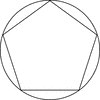
Symbols & Depiction: Symbols include the eagle Kuros, often seen clutching bolts of lightning in its talons; the Solkar, a pentagon in a circle; and the Trishulion, Valkas' trident-like staff of power. He is depicted as an aged warrior, stern and unyielding, but subject to occasional whims.

Prestige: The Empire of Tyrhennea holds Valkas to be chief of the among the gods. It was he who subdued the titans, the dragons, and the abominations of the Elder World, and he who decreed or divined the natural laws of the cosmos. His bride, Yuna embodies the harmony of family, society, and the World. Alcidine is either his earthly son or his very avater. Taranis and Valkarrea, primarily patrons of craft and wisdom, also go forth in warrior aspects to enforce the Lawgiver's will. Even his brother Grivenar serves as adviser and seer to the Skyfather's court.

Among the Vagyar, his prestige is much diminished. Although recognized as the Skyfather and conqueror of monsters, his veneration is eclipsed by that of his children and his brother.

The Solkar
Veneration: Valkas is often invoked to witness binding oaths, and swearing such an oath before witnesses while sketching a solkar or trishulion is by Tyrhennean law the equal of a signature or seal. Even the Vagyar recognize that Valkas will hold a man to his word, and that ill-fortune will follow those who defy him. The typical Vagyar's pragmatic solution is to avoid making promises, or else to break them with such regularity that Valkas can't possibly take such oaths seriously.

In Tyrhennea, the Law for which Valkas stands is built upon a foundation of loyalty to one's society, community, and family. Personal integrity and self-sacrifice and seen as great virtues, and misfortune is frequently attributed to transgressions of cosmic law. Sacrifices and penance may placate the Lawgiver, but Yuna is often beseeched to intercede for mercy. In the Delian cities, it is widely recognized that Valkas has a soft spot for those who can impress him with their daring and panache. "If you cannot be meek, be astonishing," as one Delian proverb puts it, "and the gods may smile on you yet."

Legends: There are two main cycles of legends about Valkas. The first is focused on his exploits at the dawn of time, slaying or subduing the monsters of the Elder World and ordering the cosmos according to Law. The second normally centers around a mortal who transgresses against the cosmic Law, and either suffers some terrible fate or serves as the god's champion on one or another epic quest. Valkas acts as little more than a judge or patron in these latter tales.

Artifact - Thunderheads: Valkas is occasionally depicted shooting thunderbolts from his bow, either to warn or to slay those who have offended his judgement. It is said that the arrows that channel this sky-fire are burnt to cinders, but that the arrowheads may sometimes survive. Treasure-hunters have been known to scour the sites of lightning strikes in hopes of finding such relics.

Monday, January 30, 2012

The Village of Sham

Sham could fit into this space.
Sham is a small village on the north side of the Shimrod Forest, east of the Imperial territories of Partholon. With a population of about 200, the village takes up less than seven acres. Most houses are clustered inside the wooden stockade that protects against Kruthar raiders and marauding wolves.

Sham supports itself mainly by fishing and woodcutting, with some farming and other trades rounding out the village life. A volunteer militia protects the village. At any time a handful of lookouts patrol the stockade and when the warning bell rings, dozens of villagers race to arm themselves and defend their home. Most of the militia are "normal men," 0-level NPCs, but a few have seen enough action, either here or in service to the Baron, to count as 1st level fighters.

Desmond is lost in thought.
The village falls under the rule of Baron Blackhart, whose castle lies two days' journey south, on the coast. He requires little of the village save their taxes, and they ask little of him in return. The village elder, Desmond, is the nominal local authority, but little governance is actually required on a regular basis. Town meetings are usually sufficient to deal with any special concerns that may arise. This is probably fortunate, as Desmond is very knowledgeable about a variety of topics, but is quite senile and possibly a bit mad. His granddaughter, Rosalyn, takes care of him and supports the household primarily by accepting bribes from those who would consult with the absent-minded sage. She typically greets visitors by informing them that "The Elder is quite busy," and will follow it up with, "His time is very valuable," if they don't seem to get the hint.

Weyland the Smith is something of a craftsman-polymath, being the village blacksmith, bladesmith, whitesmith and brightsmith. Upkeep of the militia's armory is his chief responsibility, while his several apprentices usually see to most of the standard tasks of the forge. This is the man to see for ordering new weapons and armor, as well as to have jewelry appraised. He recently fell ill, and his daughter Nylian has taken a break from her treasure-hunting to take over his responsibilities.

Mr Barliman appreciates your custom
The Blue Boar Tavern is the social center of the village - the place where locals relax after a hard day's work, socializing, recreating, and gossiping. Harlan "the Boar" Barliman offers a selection of food and drink as well as a roof over the heads of rare travelers. Private rooms, for lodging or for parties, are available for a silver coin a night.

Adventure opportunities abound, for those willing to look around a bit. Just a few miles west of town are mysterious ruins, where the Company of the Burning Fist have been delving for months. The dungeon they've been exploring has been identified as an underground temple of Zhothaqquah, and evidence suggests the ruins were once an Agha-yin city.

A half-day's journey to the south is "Snake Den," the cave where a pair of giant adders had nested, before the company slew them and destroyed their eggs. In the nest was a caern of stones spattered with black wax, before an immeasurably deep pit that intimidated even the normally-fearless Nylian. Plans to explore this pit have been delayed by logistics and by the more tempting opportunities in the ruins.

And somewhere in the northern hills are the Kruthar barbarians, savages that are more animal than man. They've been raiding more frequently of late, and much of the militia has been stricken with plague.

Wednesday, January 25, 2012

Legends of Partholon: the Rune-lord, Grivenar

Grivenar encountered on a foggy night
Names & Titles: Grivenar, the Grey God, the Twilight Eye, the Rune-lord, the Father of Magic

Prestige: A major god, but one whose attention is best avoided.

Veneration: The Vagyar deem him the most powerful of all the gods, and therefor their leader. In Tyrhennea, he is depicted as brother to Valkas, and his adviser on eldritch matters. His ravens bring news and omens that even Valkas' sharp-eyed eagle might overlook.

The Vagyar generally deem all magic-users his priests, and fear to cross his will. Nonetheless, Vagyar warriors distrust magicians, for Grivenar acts on his own purpose and not for the good of mankind. Even a hero who wins the Grey God's favor is still a pawn that may be sacrificed.

In the Empire he is little-worshipped and rarely beseeched, save by those who seek protection from or mastery over magical forces. He is associated with guardianship of dead souls, and ravens and crows are said to be his spies and servants, as well as carrying newly-dead spirits to the underworld.

Overall, he serves only his own schemes, and it is deemed wisest to avoid his attention.

Legends: It was Grivenar who gave to mankind the secret of the Cantrik glyphs, the runes and hierograms that codify magic into spells. It is said that he journeyed through the Nine Beyonds and suffered great agonies to discover the secrets of spellcraft. Some legends say that even the fundamental concept of the written word was taught to humanity by Grivenar.

Many Vagyar legends tell of heroes who were given magical trinkets or enchanted blades by Grivenar, or by a nameless traveler as he is often depicted, or even by a great, one-eyed raven. In virtually all of these tales, the hero met his doom when his artifact was inevitably lost to folly, or fate, or to the god's whimsy. One legend tells that Grivenar collects the souls of great heroes to form an army somewhere in the realms of the dead, and that he will guide aspiring heroes along the path to greatness, only to lead them to their dooms when they have proved themselves worthy of his collection.

Artifact: The Runestaff. This gnarled, wooden staff is inscribed with runes in winding patterns along its length. Some legends claim it is the heart of the world-tree, and is therefore the very incarnation of the axis mundi, the center of the world. Its runes are said to encode many spells, and it is also called "the Key to the Outer Gate," referring apparently to the ability to travel beyond the world's edge. The Runestaff has come into mortal possession several times over the ages, sometimes for years, sometimes for scant days. In every case, the staff eventually disappeared.

Legends of Partholon: Rune-swords

There is a legend that tells of a time long ago, when humanity was still young. The elder race of Agha-yin had long fallen to decadence, worshiping obscenities and things from Outside. The sorcerer-kings of Arkhemea embraced wilder and darker magicks in their endless struggle for primacy. These litanies and incantations echoed across the chasms beyond space and time, and terrible things turned their attention to this small realm of light and life. 

Out of the north came a sage cloaked in grey, and with him he brought three great secrets. The first was the secret lore of wizardry, a more constructive magic that attuned its user to the harmonies of the cosmos. The second was the secret artifice of the rune-swords, that would give any stalwart soul the means to battle the spawn of chaos. The third secret has been lost to time. 

There are other legends, of course. There are texts that were written in scripts more ancient than any human tongue, and fragments still survive, copied and annotated in tomes of forbidden lore. Among those scholars and sorcerers who have read these passages, there are those who have claimed that rune-swords were known to these pre-humans, and that even the princes of Agha-yin had rune-swords of their own.  

Legends of Partholon: The Grey Sage, Zagyg

A statue of the Grey Sage
Names & titles: Zagyg, the Grey Sage, the Mad Mage, the Labyrinth Lord, the Catacomb Keeper

Prestige: Demigod or legendary hero

Veneration: He is a patron of magic, moreso of temperance in spellcraft, and wizards claim him as the founder of their tradition. He is commonly invoked for protection from malign spells, and sorcerers call upon him to keep their incantations from drawing otherworldly attention.

He is widely regarded as a champion of the gods of Law, and credited with sealing of the Underworld's many entrances with sprawling labyrinths, filled with tricks and traps to keep the spawn of Chaos locked in their dark world, and to deter those who might be tempted to ally with them.

Perhaps as an extension of this aspect, Zagyg is also deemed a protector of tombs and crypts. Paradoxically, treasure-hunters and tomb-robbers often sacrifice in his name, in hopes of currying guidance and luck, or at least mercy.

However, Zagyg is also called by some "the Mad Mage," and credited with 

Legend: Perhaps because he is such a minor figure, no single, unified version of his legend has yet risen to prominence. The accounts that do exist are so varied as to be contradictory. Some tell that he is the son of, or even the earthly incarnation of, the grey god Grivenar. Others claim that he was an Arkhemean sorcerer-king who repented and abandoned the perpetual struggle for power to pursue a higher calling: crusading against the creatures of Chaos and the Underworld. One version says simply that he came out of the north bearing spells and artifacts to raise a crusade against the vile decadence of Agha-yin and the sorcery of Arkhemea.

Artifacts:  Any rune-sword might be considered an artifact of Zagyg, but he, like any magic-user, was unable to wield them himself. When confronted with physical force, Zagyg often relied on his Serpent Staff.  He would hurl the staff at his foes, or simply throw it down at his own feet, and it would become a great serpent, crushing his enemies in its coils or even devouring them whole. When none still dared oppose him, the serpent would return to his hand and resume its former shape.

Monday, January 16, 2012

Backstory

The campaign is set in the borderlands of Partholon - to the west is the Imperial Territory, to the east lie the Small Kingdoms. On the northern edge of the Shimrod Forest is the tiny village of Sham - a peaceful hamlet of woodcutters and fishermen, only occasionally bothered by savage Kruthar barbarians raiding from the northern hills.

It is the year 295 AC - that is, the 295th year After the Crowning of the first Emperor in Tyrhennea. Early in the spring, villagers began disappearing, and rumors circulated of goblyns being sighted in the woods. Search parties found mysterious ruins and numerous tracks in and out of a doorway, beyond which lay a stairway winding deep below the ground...

Ash Slayum is a veteran warrior, dungeon-delver, and treasure-hunter. His martial prowess is exceptional, his survival instincts are keen, and his word is his bond (which may be why he rarely gives it). He speaks little of himself or his past, but his men-at-arms have occasionally hinted at a tragic love with a woman of the Faer Folk.

Svaarden is a wandering holter and hunter, an expert archer and master of woodcraft. He is, however, very short on people-skills, but rarely lets that stop him from putting his foot into his mouth. He's also untrustworthy and unpredictable, but he's never turned against the party, technically.

Ash and Svaarden met in the dungeon when their respective search parties were wiped out by the underworld's denizens. They have delved successfully together for many months, and eventually incorporated the party into an official treasure-hunting company, endorsed by Baron Blackhart. The rest of the party looks to them as unofficial leaders, a fact complicated by their conflicting ethical perspectives.

The rest of the party includes:

Clementine, a cleric of the Sacred Order of St Alcidine. She is a holy warrior dedicated to battling the restless dead and all the eldritch horrors of the underworld. Capturing the treasures of the spawn of Chaos is a victory for her order and for the gods of Law.

Billium Dedpulius, or "Bill" to his friends, is a magic-user of the secret fraternity of Wizards. His order devotes itself to constructive spellcraft and forbids the destructive and world-warping magicks of sorcery. His mentor, Incanus, attempts to provide the guiding light of wisdom, but Bill's obsession with vanquishing the creatures of darkness has led him to be tempted by the forbidden lore of sorcery.

Nylian is a native of Sham, the daughter of Weyland the Smith, and has always been restless in the quiet village. Even as a child she was a rough-and-tumble tomboy, constantly getting into fights with boys twice her size - and often winning. Her father tried to teach her the Hammercraft to channel her energies toward productivity, but where he embraced the constructive aspects of the Thunder Lord Tanaris, Nylian was drawn to his warlike aspect. She joined the militia before even completing her apprenticeship at the smithy, and Kruthar savages have learned a wary respect for "the hammer girl." When the delving party began returning to town with great treasure and harrowing tales, she informed them in no uncertain terms that she was now joining them.

Gottfried also grew up in Sham, and like Nylian he longed for more excitement than the little village could provide. He was raised on stories of his piratical uncle, Magnus the Raver, and joined the militia with hopes of learning the skill to fight at his uncle's side. When called upon to defend Sham against Kruthar raids, Gottfried displayed a berserker's spirit, heedless of danger, knowing only the drive to slay his foes. When Magnus  came to visit his sister and nephew, he and Gottfried joined Ash & Svaarden's party in hunting monstrous adders in the woods. Magnus was calcified by an adder's toxic blood, and Gottfried swore to find and destroy the monsters' nest. With the party's help, he succeeded, and earned his place among the delvers.

Saturday, January 22, 2011

Regarding Magic

Here's a series of largely-disorganized thoughts regarding magic...

In Warren Ellis & Darrick Robertson's Transmetropolitan, there are many brilliant ideas. One of my favorites is the story of the Man Who Wanted to Invent a Better City:

A huge mysterious,explosion destroys a city block aside from a single apartment. Investigating, the authorities find mysterious heiroglyphs..
The scrawl appeared to comprise three equations. The three equations seemed to represent a machine. A machine that was just 3 ideas in motion around each other. Solving the equations activated the machines.

It took ten years to evolve any workable theories as to what the creator - a half educated seventy-year-old man who worked as a janitor - was trying to do. He himself had had to invent his own mathematical language to do half the work.

It took ten full years to work out that it was a machine intended to make another City. A better City. There were mathematical expressions of ethics and love and dignity in his paperwork. For a moment there, that guy must have seen another world opening up before him. A better world. A good City.

And then the flaw in his math kicked in and the block was incinerated.


I like to imagine that this is how the fireball spell was discovered. 

Jack Vance linked magic and math in right in the first story of The Dying Earth:
In this fashion did Turjan enter his apprenticeship to Pandelume. Day and far into the opalescent Embelyon night he worked under Pandelume's unseen tutelage. He learned the secret of renewed youth, many spells of the ancients, and a strange abstract lore that Pandelume termed "Mathematics."
"Within this instrument," said Pandelume, "resides the Universe. Passive in itself and not of sorcery, it elucidates every problem, each phase of existence, all the secrets of time and space. Your spells and runes are built upon its power and codified according to a great underlying mosaic of magic. The design of this mosaic we cannot surmise; our knowledge is didactic, empirical, arbitrary. Phandaal glimpsed the pattern and so was able to formulate many of the spells which bear his name. I have endeavored through the ages to break the clouded glass, but so far my research has failed. He who discovers the pattern will know all of sorcery and be a man powerful beyond comprehension."
Newton published Philosophiae Naturalis Principia Mathematica largely at the urging of Edmond Halley, as he didn't feel especially inclined to share the insights he had developed. These insights included the calculations that explained the orbit of the planets, the three laws of motion, and the universal law of gravitation. Even when convinced to publish, Newton made the book intentionally difficult in order to discourage mathematical "smatterers" as he called them. He wrote that he desired that the later volumes of the work should be sensible only to those who had read and understood the earlier volumes, while others have written that without the third and final volume, the first two volumes make little sense.

This bizarre and sprawling text, which remains largely insensible to those of us who can read Latin but aren't math-wizards, introduced the world to calculus (which Newton had worked out about three decades before he could be bothered to share it with anybody else; he was rather more interested in alchemical experimentation and analyzing the floor plans of the lost Temple of King Solomon in Jerusalem, hoping to glean mathematical insights into the the Second Coming and the Eschaton). Newton's mathematical insights describe and explain some of the key ingredients of physics, which allowed other scientists to calculate what would be necessary to achieve certain effects, such as flying, stopping bullets, and orbiting the friggin' planet.


Wednesday, January 12, 2011

The Moons of the Year

The World uses a lunar calendar with a slightly irregular relationship between the lunar months and the solar seasons. There are 12 regular months each year, with an additional irregular month that rotates from season to season. The irregular month is sometimes called the "Leaping Moon" because it leaps from one season to another.

Each month is defined by the moon, being 28 days long and divided into four weeks of seven days each. That makes a year 364 days long, or 52 weeks. My goal in designing the calendar was to keep it simple for me to track and simple for the players to understand. The rotating "Leaping Moon" is the only real complexity, and I rather like the quirkiness it adds. 

MonthCommon NameCorresponds to...
1 Wolf Moon January
2 Storm Moon February
3 Crow Moon March
4 Egg Moon April
5 Milk Moon May
6 Flower Moon June
7 Mead Moon July
8 Grain Moon August
9 Barley Moon September
10 Blood Moon October
11 Hunter's Moon November
12 Feast Moon December


As for the Leaping Moon, its proper name depends on when it appears in the year. It always bridges two seasons, and indicates either an extension of the prevailing weather or a slower transition between seasons. It is anyone's guess whether this is a means to account for the discrepancy between solar and lunar cycles or a simple fact of the cosmos ordained by the gods. When the extra moon follows Feast, it is the Hunger Moon. When it follows Barley it is the Harvest Moon. When it follows Flower it is the Thunder Moon, and when it follows Crow it is the Waking Moon.

The current year is 295 After the Crowning of the first emperor. The current leg of play began during the Milk Moon, and the players are currently mid-Flower. This year there will be a Harvest Moon.

Saturday, December 25, 2010

Old Moroze

 During the long nights of the Frost Moon, claim the settlers of the Borderlands, the creatures of feyerie grow bold and mischievous. Goblyns, drolls, and tomtens are said to venture indoors, helping themselves to the table scraps and warming themselves by the hearth while the family sleeps, slipping away in the hours before dawn. These strange visitors are made welcome by the wise, for they can be destructive when offended, and may sometimes be quite helpful when they are pleased. Those who seek the favor of their eldritch neighbors will leave out an offering of beer, milk, and small cakes, most especially around the night of the solstice.

Sometimes the family will wake to find small chores done - animals already seen to, some cleaning or mending already finished, firewood split and neatly stacked. Sometimes other, stranger gifts may be discovered - dolls in the likeness of the family members or fashioned after folk of far-off lands, newly-woven hoods and cloaks, even fresh fruit. Such gifts are rare, and a household that has received such is popularly believed to have been visited not by the local faerie folk, but by Old Moroze himself.

The legend tells that Old Moroze rides through the Borderlands during the Frost Moon in a tiny sledge drawn by a silvery goat or caribou. He is drawn to houses where plants have been preserved indoors, for he lives all his life in the northern snows and sees little of living green. He is believed to be the kindest and most generous of all the fey visitors, and is an ardent foe of goblyns and frost giants. Some say that every year he visits but a single house, the most worthy house he can find, while others say that he travels wherever the snow may reach, and visits a new house each night - and sometimes several in a village. It has even been suggested that Old Moroze himself is responsible for turning the wheel of the year forward when it threatens to freeze in unending winter, dooming himself to renewed exile even as he ensures the rising tide of light and life.

None can say with any certainty what is the truth of Old Moroze. But here's hoping he visited your home this year, and left you with a little something to make your winter warmer.